Residents of occupied Oleshky evacuated to Ukraine via Belarus
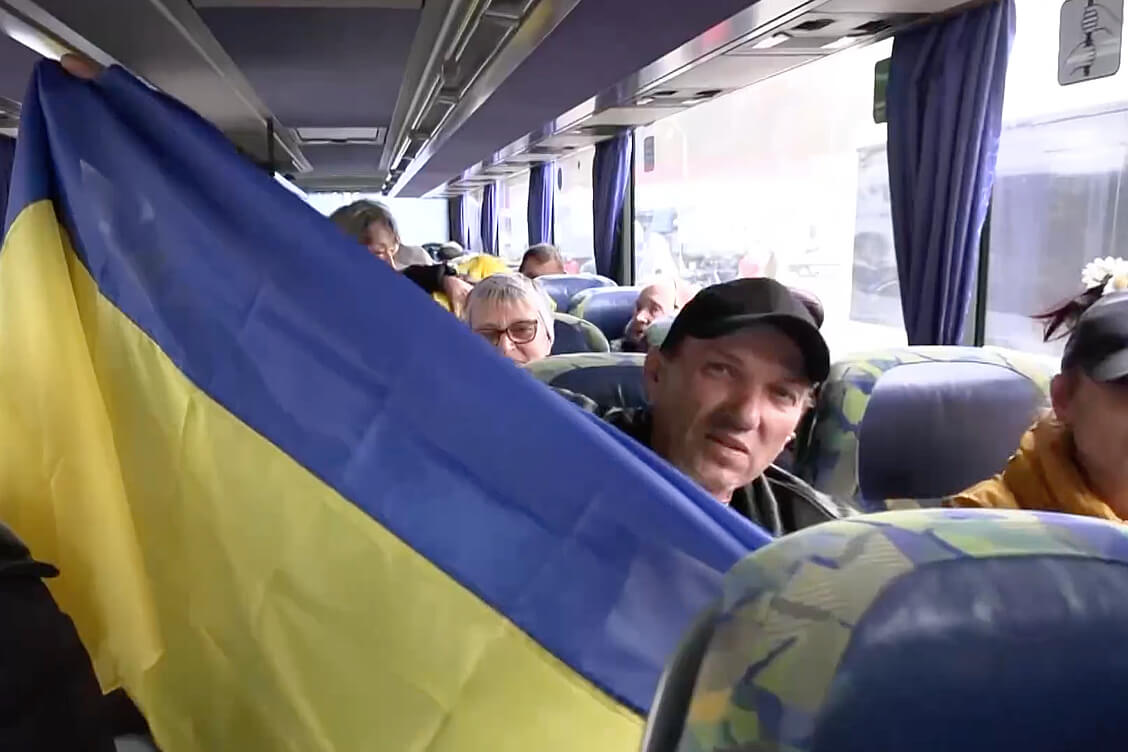
October 31, October. Residents of the Russian‑occupied Ukrainian town of Oleshky were evacuated through Belarus before crossing back into Ukraine on Thursday in a humanitarian operation negotiated by US First Lady Melania Trump.
On Thursday morning, four transport aircraft with the evacuees on board arrived at Homiel Airport from Anapa in Russia’s Krasnodar province, where they had been brought on buses through Russian-occupied Crimea.
Ukrainian Ombudsman Dmytro Lubinets accompanied the group throughout the journey, and Belarusian state media reported that emergency and medical workers as well as Red Cross volunteers met the arrivals at the airport in Homiel.
A tent camp was set up at Homiel Airport to accommodate the evacuees before they were put on buses and brought to the Novaya Huta checkpoint at the Ukrainian border.
Taking to Telegram on Thursday afternoon, Ukrainian President Volodymyr Zelensky confirmed that the evacuees had crossed into Ukraine and would receive the necessary assistance.
The exact number of people transported through Belarus has not been disclosed. Earlier estimates suggested around 750 Oleshky residents had requested evacuation, though some reportedly intended to travel to Russia.
With Oleshky surrounded by minefields, cut off from basic services, and located in the war zone, its remaining residents could not leave safely without an organized humanitarian corridor.
The operation was made possible by a temporary ceasefire in the Kherson province, which allowed roads leading out of Oleshky to be cleared of landmines and humanitarian supplies to be delivered.
The agreement was reached through the mediation of Melania Trump, who reportedly initiated contacts between Moscow and Kyiv after learning about Oleshky’s plight.
Located on the left bank of the River Dnipro opposite Kherson, Oleshky has been under Russian occupation since February 2022. By the fall of 2026, the city was facing a humanitarian disaster, with shortages of food, medicines and drinking water and no electricity, water or heating. Ukrainian estimates put the remaining civilian population at between 2,000 and 6,000 people. The pre-war city had around 24,000 residents, and thousands left it while escape was still possible.

Russia returns remains of 252 soldiers via Belarus
October 22, Pozirk. Russia and Ukraine have exchanged fallen soldiers’ remains at the Novaja Huta border checkpoint at the Belarusian-Ukrainian border, Belarusian state-run media outlets reported on October 22. Russia has returned the bodies of 252 deceased Ukrainians, while Kyiv …