The material is available only to
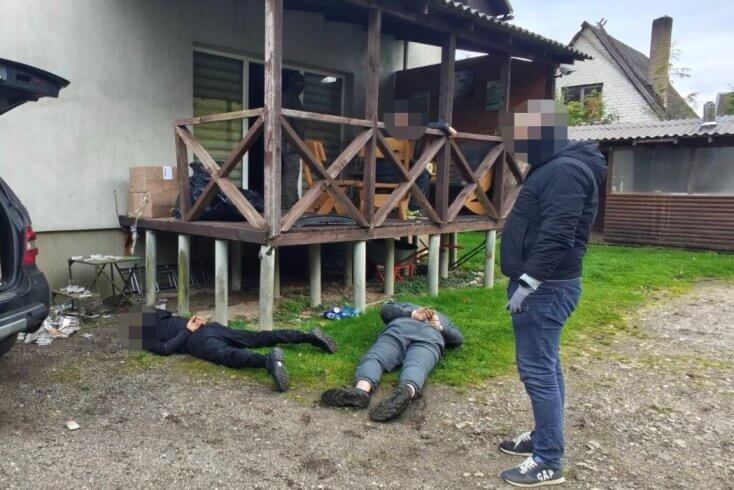
POZIRK+Lithuania arrests six over cigarette smuggling from Belarus
The material is available only to
POZIRK+
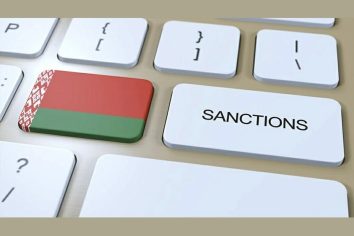
April 24, Pozirk. The European Union in its latest package prohibited any transaction involving the Belarusian central bank’s future digital currency, banned “transactions with any crypto-asset service providers” and services of travel agents and tour operators in Belarus and restricted imports and exports.
The restrictive measures, effective starting April 24, are part of the 20th package of sanctions on Russia for its aggression against Ukraine, adopted by the Council of the European Union on April 23. The new restrictions on Belarus are set out in the EU Council’s Decision (CFSP) 2026/512. The document, published by the European Union’s Official Journal, says that “in view of the gravity of the situation, and in response to Belarus’s continued involvement in Russia’s aggression against Ukraine, it is appropriate to introduce additional restrictive measures.”
A key step is a ban on transactions involving Belarus’s planned digital currency. The EU said the digital ruble could help bypass sanctions, noting it is “intended… to provide a payments system which shields Belarusian persons from the effect of the restrictive measures.” As a result, the EU now prohibits any involvement in the currency or support for its development.
“A limited period to enable the orderly termination of existing contracts should also be provided for,” it noted.
The EU also imposed a broad ban on crypto-related activity in Belarus. It explained that targeting individual providers would not be enough, as the government could shift operations elsewhere. Therefore, “it is… appropriate to prohibit transactions with any crypto-asset service providers” based in Belarus.
Beyond finance, the sanctions expand export and import restrictions. New limits cover goods that could strengthen Belarus’s military or industrial capacity, including chemicals, metals, rubber products, industrial equipment, laboratory glassware and certain high performance lubricants and their additives. Transit of certain goods through Belarus is also further restricted.
The EU also restricted services related to tourism in Belarus, citing a heightened risk of arbitrary arrests in the country.
“Moreover, it is appropriate to introduce further import bans on goods which allow Belarus to diversify its sources of revenue, thereby enabling its involvement in the Russian aggression against Ukraine, including on certain raw materials, metals, certain minerals, scrap of steel and other metals, chemicals, articles of vulcanised rubber and tanned furskins.”
To strengthen enforcement, the EU expanded legal protections for its companies, preventing claims related to contracts disrupted by sanctions from being pursued through third countries.
According to the EU Council’s press release, the new package of sanctions includes “three new listings related to the Belarusian military-industrial complex and the Lukashenka [Łukašenka] regime. For the first time, a Chinese state-owned entity is being targeted under the Belarus sanctions regime, due to its role in the production of Belarusian military goods.”
In particular, the EU has imposed sanctions on Belarusian Vołat-Sanjiang and its Chinese co-founder, China Space Sanjiang Group, as well as Belarusian Oil Company.
The EU has extended its Belarus sanctions regime until February 28, 2027.