The material is available only to
POZIRK+Cichanoŭski’s reform proposal is a hard sell
The material is available only to
POZIRK+
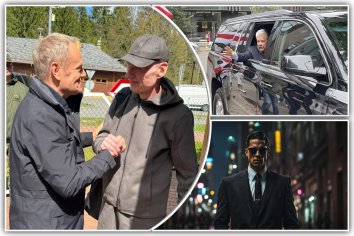
US President Donald Trump’s Truth Social post praising the release of journalist Andrej Pačobut may serve as a kind of security guarantee for the former political prisoner, who says he plans to return to Belarus soon.
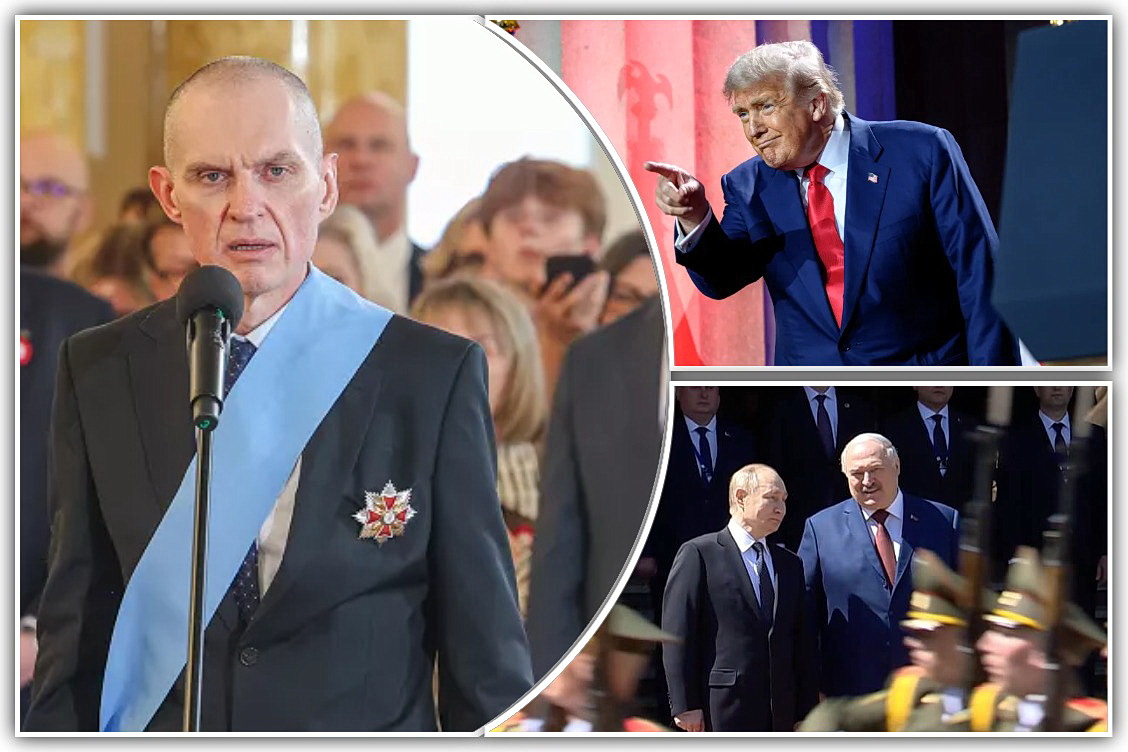
Trump acknowledged Alaksandar Łukašenka’s “cooperation and friendship,” which led to Pačobut’s release from a Belarusian prison on April 28.
Minsk freed and handed over to Poland the journalist and Polish minority activist after Special Envoy John Coale met Polish President Karol Nawrocki and Foreign Minister Radosław Sikorski in Warsaw on April 27.
“Thanks to my Special Presidential Envoy, John Coale, we were able to push hard to make this release happen,” Trump said nearly two weeks after Pačobut’s release.
Polish diplomats had involved Washington in efforts to secure Pačobut’s freedom long before that. In late September, Polish Foreign Minister Radosław Sikorski met Christopher Smith, the US deputy assistant secretary of state, to discuss the issue. Pačobut was a top priority for Warsaw.
Polish President Karol Nawrocki described him as “niezłomny” (“unbroken”). Politicians in Warsaw see Pačobut as a symbol of steadfast Polish identity under dictatorship.
The journalist could reportedly have been released last fall, but the deal collapsed after Poland delayed the reopening of two border checkpoints by two weeks in solidarity with Lithuania.
Warsaw eventually reopened the Bobrowniki and Kuźnica checkpoints in November, apparently as part of the agreement.
In recent interviews, Pačobut made clear that he intends to return to Belarus after undergoing medical examinations in order to support the local Polish community.
Belarusian authorities clearly do not want him to come back. However, denying him entry or arresting him again on “extremism” charges would likely irritate Trump, with whom Minsk appears eager to strike a broader bargain.
Such a move would also undermine Belarus’ efforts to unfreeze relations with Poland, an economically powerful neighbor that was once one of Belarus’ main trading partners.
Poland also exerts considerable influence over EU policy toward Belarus.
At the same time, allowing Pačobut to openly express his views could encourage others to speak out against the government. The regime, for its part, seeks to maintain an atmosphere of fear.
Still, the authorities have already made concessions by releasing outspoken critic Mikałaj Statkievič despite his refusal to accept deportation.
Pačobut’s return, therefore, would present a serious test for Minsk — especially if he continues defending the rights of Belarusian Poles as openly as before.
Meanwhile, Belarusian Foreign Minister Maksim Ryžankoŭ said Minsk is ready for discussions with Poland and that the ball is now in Warsaw’s court.
“They said many times that they had some conditions. It just happened that all issues have been resolved today. Please, we are ready for consultations with the Polish side at the level of deputy ministers, or at another level, of some plenipotentiary etc.,” he said.
The phrase “all issues have been resolved” refers not only to Pačobut’s release, but also to a sharp decline in attempts by undocumented third-country migrants to cross into Poland from Belarus.
Poland reported just 172 incidents between January 1 and April 26, compared with 5,568 during the same period last year.
The recent easing of migratory pressure may be linked to political dynamics involving Minsk, which appears capable of redirecting migration flows across the region.
Poland recorded a steep drop in irregular migration after reopening the Kuźnica Białostocka–Bruzhi and Bobrowniki–Bierastavica crossings to traffic on November 17 — a move Minsk hailed as “constructive.”
The trend suggests that Łukašenka is genuinely interested in improving relations with Warsaw.
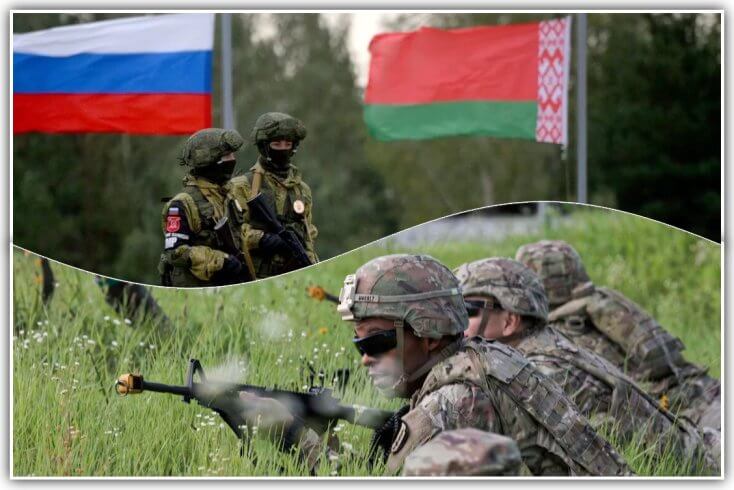
It is also worth noting that last year Minsk moved the Zapad-2025 military exercise involving Russian troops farther away from Belarus’ borders with Poland and Lithuania in an apparent attempt to ease neighboring countries’ concerns.
In a separate incident, Belarusian air defense forces warned Poland on September 10, 2025, about drones flying in its direction and even claimed to have shot down some of the stray UAVs, reportedly launched by Russia against targets in Ukraine.
It remains unclear what conditions Minsk might set for engagement with Warsaw. Negotiations over Pačobut were conducted primarily through the security services, whereas Ryžankoŭ is now calling for contacts between the two countries’ foreign ministries.
Minsk may be seeking political recognition and sanctions relief. Since the EU decided not to recognize Łukašenka following the presidential election of 2020, which Brussels described as fraudulent, Poland cannot substantially change its position without broader EU approval.
Speaking at a news conference in Warsaw on April 28, Polish Foreign Minister Radosław Sikorski expressed cautious hope for a reset in relations with Minsk, while emphasizing that Łukašenka must take the initiative.
“We are always ready to respond to positive gestures, but Belarus should first wish to become a member of the European family of nations,” he said.
“I don’t want to make empty promises, because we have already had such false dawns,” Sikorski added, noting that relations had improved in the past when Belarus held no political prisoners.
Before the 2010 presidential election, Sikorski met with the Belarusian ruler and, on behalf of the EU, offered €3 billion in assistance in exchange for a reasonably fair election campaign. However, Łukašenka later ordered a brutal crackdown on opposition protests against his re-election.
Łukašenka, who rules Belarus with an iron fist, understands perfectly well that there is no place for him in the European family of nations under its current political standards. Free and competitive elections would likely mean the end of his rule.
Still, beyond politics, Minsk and Warsaw have many practical issues to discuss, including trade, cross-border cooperation, transportation and regional security. Both countries could benefit from restoring passenger rail services and easing visa procedures.
US Envoy John Coale, who is expected to visit Minsk soon, will likely encourage both sides to move beyond rhetorical exchanges and focus on concrete agreements.
At the same time, Washington’s interest in resolving the Belarusian-Polish standoff should not be overstated. Trump and his administration face many other, far more pressing international issues.
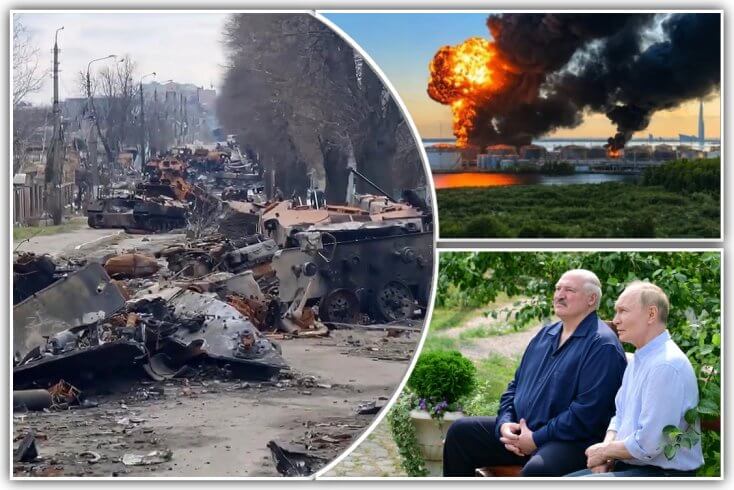
Moscow, meanwhile, is closely monitoring every Belarusian overture toward the West. The Kremlin is unlikely to allow its ally to pursue an entirely independent geopolitical course.