Lithuania firm on sanctions against Belarus, FM says
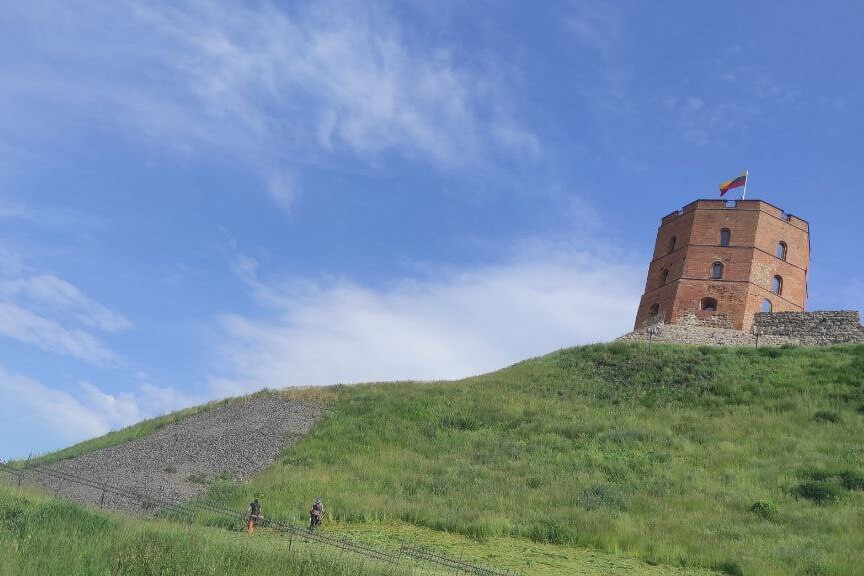
February 11, Pozirk. Discussions about Lithuania’s policy on Belarus do not mean that it is being disputed or urgently needs to be changed, Lithuanian Foreign Minister Kęstutis Budrys told Lrytas on February 11, commenting on remarks by a member of the ruling coalition about the possible resumption of a dialogue with Minsk, according to LRT.
“I think it is being wrongly speculated that if we are discussing something, this means that we are calling into doubt the current policy and automatically assuming its immediate reconsideration,” Budrys was quoted as saying. “No, it is necessary to check whether what we are doing is really right.”
Mindaugas Sinkevičius, chairman of the Social Democratic Party of Lithuania, earlier said that a meeting at the level of deputy foreign ministers of Lithuania and Belarus was not “an absolutely taboo,” and that Lithuania should respond to actions by its partners – the European Union and the United States, LRT reported. He warned, however, against discussing political dialogue with Minsk before the EU has extended its sanctions against Belarus.
In this context, Budrys reportedly voiced support for the discussions about Lithuania’s sanctions policy and simultaneously played up the role of sanctions as “one of the most efficient economic and political tools.”
“If someone believes that sanctions do not work, let us discuss – perhaps a wrong area has been chosen or they are not being implemented, this is also part of the problem,” Budrys said. “The circumvention of sanctions is a big subject. The entire situation regarding our carriers has also exposed this, and here we probably have more than one gray area.”
Budrys cautioned against dismissing sanctions as inefficient until the most has been made of them. “So far we have not exhausted the potential of the sanctions policy against either Russia or Belarus,” he said, adding that both America and Europe have more measures to apply.
Budrys stressed that Lithuania has not shifted on the original causes of sanctions against Belarus and he therefore sees no reason to lift them.
“Sanctions were imposed [on Belarus] for violating human rights, for facilitating the aggression against Ukraine, for helping Russia commit war crimes, including the abduction and indoctrination of children,” he said. “Until this changes, there are no grounds for talking about modifying or softening the sanctions. On the contrary, Lithuania has boosted its sanctions regarding Belarus.”
Lrytas recalled that in mid-December Aleksandar Łukašenka and John Coale, US special envoy to Belarus, negotiated the release of a large group of political prisoners in exchange for the removal of US sanctions on potash from Belarus.
Political analysts suggested that Washington might next try to pressure Lithuania into lifting its ban on the carriage of Belarusian-made fertilizer via the Klaipeda seaport.
Lithuania put the ban into place in February 2022, linking it to US sanctions and “national security.” In December 2025, Belarus’ potash giant Biełaruśkalij filed a $12.09-billion compensation lawsuit against Lithuania. The EU subsequently imposed its own restrictive measures on Belarusian potash and is due to consider their extension later this month.
The European Union will “very likely” extend its sanctions on Belarusian potash fertilizers after February 28, ruling out any discussions on resuming transit, Budrys told Žinių Radijas on January 22.
The official responded to a remark by Lithuanian MEP Vytenis Povilas Andriukaitis, who suggested resuming fertilizer transit via Lithuania in exchange for the possibility of transporting Ukrainian cargoes to the port of Klaipėda through Belarus.
“The context is very important here – my immediate question would be when and under what conditions,” LRT quoted Budrys as saying. “Now the Ukrainian-Belarusian border is sealed completely. . . so we are probably talking about the conditions after the peace agreement and when there are no sanctions.”
“For now, this is not possible, at least from a legal point of view, because EU sanctions remain in force, and discussions on their extension are currently underway,” he added.
Earlier this month, Lithuanian President Gitanas Nausėda said his country is firmly opposed to resuming the transit of Belarusian potash fertilizers. The politician ruled out allowing the transit even if the US deploys an additional military force in the country, or for generating additional profit to boost defenses, citing a value-based approach to politics.
Lithuania’s security chief says Łukašenka’s policies remain unchanged
February 6, Pozirk. There are no visible changes in the policies of Alaksandar Łukašenka’s regime, Remigijus Bridikis, director of Lithuania’s State Security Department, told reporters on February 6, according to BNS. When asked by journalists to comment on calls by …